



IL-6
IL-6 is a pleiotropic cytokine that regulates immune response, acute inflammation, tissue regeneration, metabolism, and stromal activation[1][2]. Mechanistically, IL-6 binds IL-6Rα and recruits gp130, activating JAK/STAT3 signaling and downstream transcriptional programs[1][3]. Disease relevance depends strongly on receptor context: membrane IL-6Rα supports classic signaling, whereas soluble IL-6Rα enables trans-signaling in gp130-expressing cells and drives pro-inflammatory activity[1][4]. Compared with these receptor forms, gp130 is broadly expressed, while IL-6R expression is restricted to selected cells such as hepatocytes and leukocytes, explaining cell-type-selective responsiveness[1]. In vascular endothelial cells, IL-6 trans-signaling induces MCP-1 through coordinated JAK/STAT3 and PI3K/AKT activation[5]. In proliferative vitreoretinopathy models, IL-6 promotes retinal pigment epithelial proliferation and epithelial-mesenchymal transition through JAK1/STAT3 signaling[6]. For experimental intervention, tocilizumab, a humanized anti-IL-6R antibody, blocks IL-6 signaling and improves rheumatoid arthritis outcomes in controlled clinical studies[7][8].
References:
- [1]. Rose-John S. IL-6 trans-signaling via the soluble IL-6 receptor: importance for the pro-inflammatory activities of IL-6. Int J Biol Sci. 2012;8(9):1237-47. doi: 10.7150/ijbs.4989. Epub 2012 Oct 24. PMID: 23136552; PMCID: PMC3491447. et al. IL-6 trans-signaling via the soluble IL-6 receptor: importance for the pro-inflammatory activities of IL-6. Int J Biol Sci. 2012;8(9):1237-47. [Content Brief]
- [2]. Danese S, et al. Interleukin-6: a therapeutic Jekyll and Hyde in gastrointestinal and hepatic diseases. Gut. 2010 Feb;59(2):149-51. [Content Brief]
- [3]. Reeh H, et al. Response to IL-6 trans- and IL-6 classic signalling is determined by the ratio of the IL-6 receptor α to gp130 expression: fusing experimental insights and dynamic modelling. Cell Commun Signal. 2019 May 17;17(1):46. [Content Brief]
- [4]. Maes M, et al. Targeting classical IL-6 signalling or IL-6 trans-signalling in depression? Expert Opin Ther Targets. 2014 May;18(5):495-512. [Content Brief]
- [5]. Zegeye MM, et al. Activation of the JAK/STAT3 and PI3K/AKT pathways are crucial for IL-6 trans-signaling-mediated pro-inflammatory response in human vascular endothelial cells. Cell Commun Signal. 2018 Sep 5;16(1):55. [Content Brief]
- [6]. Chen X, et al. Interleukin-6 promotes proliferative vitreoretinopathy by inducing epithelial-mesenchymal transition via the JAK1/STAT3 signaling pathway. Mol Vis. 2020 Jul 29;26:517-529. [Content Brief]
- [7]. Ohsugi Y, et al. The recombinant humanized anti-IL-6 receptor antibody tocilizumab, an innovative drug for the treatment of rheumatoid arthritis. Expert Opin Biol Ther. 2008 May;8(5):669-81. [Content Brief]
- [8]. Emery P, et al. IL-6 receptor inhibition with tocilizumab improves treatment outcomes in patients with rheumatoid arthritis refractory to anti-tumour necrosis factor biologicals: results from a 24-week multicentre randomised placebo-controlled trial. Ann Rheum Dis. 2008 Nov;67(11):1516-23. [Content Brief]
All Product Categories
-
IL-6 Inhibitors
(409)
View all products
-
IL-6 Agonists
(5)
View all products
-
IL-6 Antagonists
(3)
View all products
-
IL-6 Activators
(24)
View all products
-
IL-6 Modulators
(21)
View all products
-
IL-6 Chemical
(1)
View all products
-
IL-6 Inducers
(13)
View all products
-
IL-6 Degrader
(1)
View all products
-
IL-6 Ligand
(1)
View all products
-
IL-6 Proteins
(24)
View all products
-
IL-6 Related Products (505)
Related Products (505)

-
Recombinant Proteins (24)
-
RIPK1-IN-32
 0 ImagesCat. No.: HY-175007RIPK1-IN-32 is a RIPK inhibitor with anti-inflammatory activity. RIPK1-IN-32 inhibits nitric oxide (NO) release with an IC50 of 3.26 μM. RIPK1-IN-32 significantly alleviates acute liver injury associated with sepsis through the RIPK1/NF-κB/MAPK pathway, therefore preventing the nuclear translocation of p65 and c-fos, which results in reduced expression of TNF-α and IL-6. RIPK1-IN-32 can be used for the study of acute liver injury and sepsis.
-
Betamethasone succinate
 0 ImagesCat. No.: HY-160713CAS No.: 27297-42-3Synonyms: NSSL-BMSBetamethasone succinate (NSSL-BMS) is a nano-formulation that can cross the blood-brain barrier. Betamethasone succinate is prepared by encapsulating the Betamethasone (HY-13570) semi-succinate in PEG-liposomes. Betamethasone succinate utilizes the enhanced permeation and retention effects of liposomes to target and deliver the potent glucocorticoid to the inflammatory sites. Betamethasone succinate inhibits the secretion of pro-inflammatory cytokines (such as TNF-α and IL-6) while maintaining the level of anti-inflammatory cytokine TGF-β. Betamethasone succinate can be used in the research of arthritis and cerebral malaria.
-
Alvelestat (Standard)
 0 ImagesSynonyms: AZD9668 (Standard)Alvelestat (Standard) (AZD9668 (Standard)) is the analytical standard of Alvelestat (HY-15651). This product is intended for research and analytical applications. Alvelestat (AZD9668) is an orally active, selective inhibitor of neutrophil elastase. Alvelestat reduces elastase activity, myeloperoxidase release, neutrophil recruitment and activation, and calcium phosphate precipitation; promotes smooth muscle cell colonization and collagen deposition; and inhibits the formation of neutrophil extracellular traps (NETs) as well as NET-derived neutrophil elastase activity. Alvelestat restores endothelial dysfunction, regulates antioxidant factors, improves the expression of endothelial tight junctions, reduces vascular leakage, and accelerates wound healing. Alvelestat prevents pulmonary hemorrhage, matrix protein degradation, airspace enlargement, and small airway wall remodeling; and alleviates cigarette-induced inflammatory responses. Alvelestat inhibits the growth of abdominal aortic aneurysms exacerbated by Porphyromonas gingivalis. Alvelestat can be used in research related to chronic obstructive pulmonary disease, abdominal aortic aneurysm, radiation-induced skin injury, and bronchiectasis.
-
Balsalazide disodium
 0 ImagesCat. No.: HY-108244CAS No.: 213594-60-6Balsalazide disodium is a prodrug of amino salicylic acid that releases mesalamine (HY-15027) in the colon, offering various anti-inflammatory effects in areas of colitis, and it also exerts related anticancer effects by regulating the IL-6/STAT3 pathway.
-
Cyclo(L-Ile-D-Leu)
 0 ImagesCat. No.: HY-N18989CAS No.: 2193113-02-7
-
Xanthine oxidase-IN-21
 0 ImagesCat. No.: HY-180271Xanthine oxidase-IN-21, a Genipin (HY-17389) derivative, is an orally active mixed competitive xanthine oxidase (XOD) inhibitor with an IC50 of 0.68 μM. Xanthine oxidase-IN-21 reduces renal fibrosis by decreasing α-SMA expression and suppresses pro-inflammatory cytokines IL-1β, IL-6, and TNF-α through NF-κB pathway regulation. Xanthine oxidase-IN-21 also inhibits URAT1 and GLUT9 expression, promoting uric acid excretion and lowering serum uric acid levels. Xanthine oxidase-IN-21 shows significantly hepatorenal protection activity. Xanthine oxidase-IN-21 can be used for the research of hyperuricemia.
-
Gypenoside LVI
 0 ImagesCat. No.: HY-N21887CAS No.: 105214-48-0Gypenoside LVI is an orally active dammarane-type triterpenoid compound found in Gynostemma pentaphyllum. Gypenoside LVI inhibits ERK and JNK phosphorylation, the NLRP3 inflammasome, and modulates M1 to M2 microglial polarization. Gypenoside LVI downregulates PCSK9 expression through a SREBP-independent pathway. Gypenoside LVI promotes cholesterol efflux via ABCG1 and SRB1, upregulates LXRα-mediated reverse cholesterol transport, and attenuates foam cell formation by reducing lipid accumulation and cholesterol uptake. Gypenoside LVI inhibits IL-6 and IL-1β secretion, reduces oxidative stress, neuroinflammation, microglial and astrocyte activation, and inhibits LPS-induced microglial proliferation. Gypenoside LVI can be used for research on atherosclerosis, hypercholesterolemia, depression, and non-small cell lung cancer.
-
Licocoumarone
 0 ImagesCat. No.: HY-N20713CAS No.: 118524-14-4Licocoumarone is an active component derived from licorice. Licocoumarone has an IC50 of 12.56 μM and a Kd of 14.90 μM against human DYRK1A. Licocoumarone inhibits NF-κB activation by blocking IκBα degradation and p65 phosphorylation, interferes with MAPK activation via inhibiting phosphorylation, and downregulates the expression of iNOS. Licocoumarone inhibits LPS-induced expression of IL-1β, IL-6 and IL-10; it induces apoptosis of pancreatic cancer cells apoptosis and acts as a neuraminidase inhibitor (IC50 = 27.8 μM). Licocoumarone exhibits anti-inflammatory and antimicrobial activities, with antibacterial activity against Listeria and antifungal activity against Candida parapsilosis. Licocoumarone can be used in studies related to immune and inflammatory diseases, pancreatic cancer, and specific bacterial and fungal infections.
-
Pseudoginsenoside RT4
 0 ImagesCat. No.: HY-N17685CAS No.: 98474-77-2Pseudoginsenoside RT4 is an orally active anti-inflammatory agent. Pseudoginsenoside RT4 can be isolated from Panax pseudoginseng subsp. Himalaicus, Panax vietnamensis Ha et Grushv, and Panax quinquefolius L. Pseudoginsenoside RT4 reduces the levels of TNF-α, IL-6, and IL-1β, elevates the level of IL-10, improves the histopathological features of colon tissue, maintains the ultrastructure of colonic epithelium, protects the integrity of cell monolayers, increases the expression of tight junction proteins, raises the total content of short-chain fatty acids, corrects intestinal flora disorder, reduces the disease activity index score, restores colon length, and decreases the spleen index. Pseudoginsenoside RT4 exhibits hepatoprotective effects. Pseudoginsenoside RT4 can be used in studies related to ulcerative colitis.
-
2,2-Diphenyltetrahydrofuran
 0 Images2,2-Diphenyltetrahydrofuran (DPTHF) acts as a TRPV3 channel antagonist and is a structural analog of 2-Aminoethyl diphenylborinate (HY-W009724). 2,2-Diphenyltetrahydrofuran shows weak inhibitory activity against TRPV1 and TRPV2. It reduces hedonic feeding in mice exposed to Olanzapine (HY-14541). 2,2-Diphenyltetrahydrofuran can be used in the research of nervous system-related diseases.
-
Dexamethasone hemisuccinate sodium
 0 ImagesDexamethasone hemisuccinate sodium is a glucocorticoid prodrug and an inhibitor of IL-6 release, and its liposomal formulation is internalized by retinal pigment epithelial cells. Dexamethasone hemisuccinate sodium binds to retinal pigment epithelial cells in a time-dependent manner and exhibits no cytotoxicity toward these cells. Dexamethasone hemisuccinate sodium can be used in research on age-related macular degeneration.
-
Alvelestat-13C,d3
 0 ImagesCat. No.: HY-15651SSynonyms: AZD9668-13C,d3Alvelestat-13C,d3 (AZD9668-13C,d3) is the deuterated, 13C-labeled Alvelestat (HY-15651). Alvelestat (AZD9668) is an orally active, selective inhibitor of neutrophil elastase. Alvelestat reduces elastase activity, myeloperoxidase release, neutrophil recruitment and activation, and calcium phosphate precipitation; promotes smooth muscle cell colonization and collagen deposition; and inhibits the formation of neutrophil extracellular traps (NETs) as well as NET-derived neutrophil elastase activity. Alvelestat restores endothelial dysfunction, regulates antioxidant factors, improves the expression of endothelial tight junctions, reduces vascular leakage, and accelerates wound healing. Alvelestat prevents pulmonary hemorrhage, matrix protein degradation, airspace enlargement, and small airway wall remodeling; and alleviates cigarette-induced inflammatory responses. Alvelestat inhibits the growth of abdominal aortic aneurysms exacerbated by Porphyromonas gingivalis. Alvelestat can be used in research related to chronic obstructive pulmonary disease, abdominal aortic aneurysm, radiation-induced skin injury, and bronchiectasis.
-
Hecubine
 0 ImagesCat. No.: HY-N9164CAS No.: 62874-52-6Hecubine is a monoterpene indole alkaloid found in Ervatamia ocinalis. Hecubine activates TREM2 expression, reduces LPS (HY-D1056)-stimulated inammatory cytokines (TNF-α、IL-6、IL-1β) overexpression, as well as suppresses the levels of TLR4-, MyD88-, MAPK/PI3K/AKT- and NF-κB-related proteins. Hecubin also exhibits antioxidative effect, reduces ROS production and activates of the Nrf2/HO-1 pathway. Hecubine rescues LPS-induced behavioral deficits in zebrash larvae. Hecubine can be used for the research of neural inflammation-associated central nervous system diseases.
-
Decarine
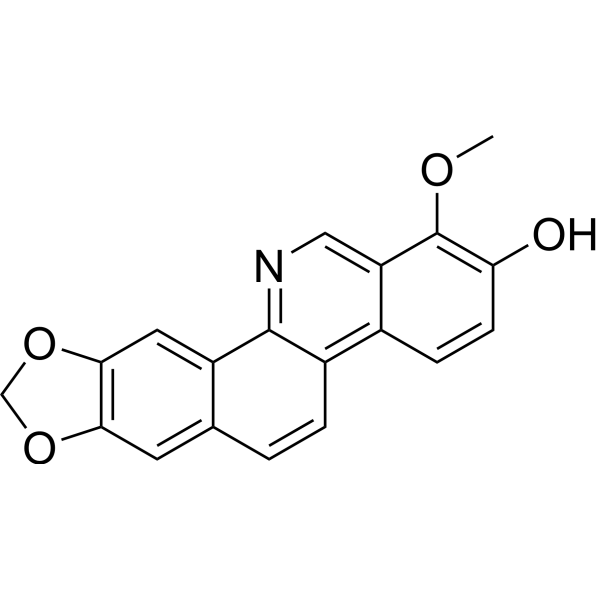 0 ImagesCat. No.: HY-N3700CAS No.: 54354-62-0Synonyms: RutacelineDecarine (Rutaceline) is a benzophenanthridine alkaloid found in Zanthoxylum species. Decarinewith shows anti-inflammatory, antimycobacterial, and anti-HIV activity. Decarine inhibits NO, TNF-α, IL-1β, IL-6, and IL-8 production in inflammatory cell models. Decarine inhibits growth of Mycobacterium tuberculosis strains, reduces intracellular Mycobacterium tuberculosis survival, and shows low cytotoxicity toward human macrophages. Decarine inhibits HIV replication in acutely infected lymphocytes. Decarine can be used for the researches of inflammation, tuberculosis, and HIV infection.
-
Anti-inflammatory agent-123
 0 ImagesCat. No.: HY-189310Anti-inflammatory agent-123 is an anti-inflammatory agent. Anti-inflammatory agent-123 inhibits NF-κB signaling pathway activation and the secretion of pro-inflammatory cytokines (TNF-α, IL-1β, IL-6). Anti-inflammatory agent-123 inhibits NO production. Anti-inflammatory agent-123 can be used for inflammation research.
-
Pratol
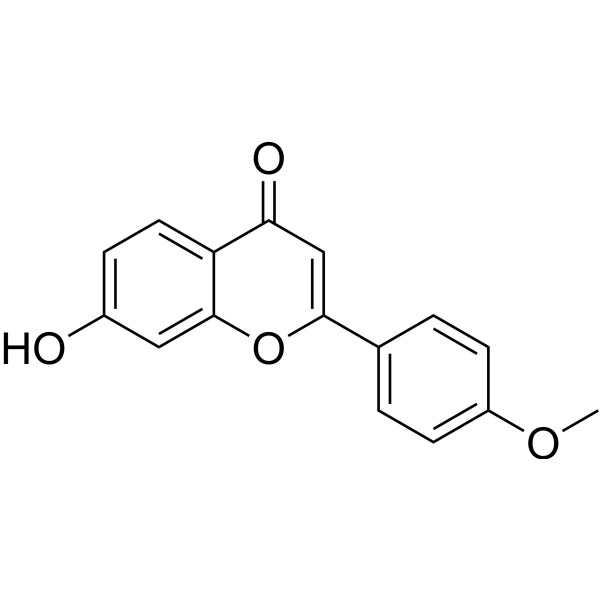 0 ImagesPratol (7-Hydroxy-4'-methoxyflavone) is an NF-κB inhibitor. Pratol also inhibits NO, PGE2, TNF-α, IL-1β, and IL-6 production. Pratol increases the phosphorylation of p38 MAPK, JNK, and ERK, decreases AKT phosphorylation, and upregulates MITF, tyrosinase, TRP-1, and TRP-2 through a PKA-dependent signaling pathway. Pratol reduces iNOS and COX-2 protein expression, inhibits p65 phosphorylation, and protects IκBα from degradation, thereby inhibiting NF-κB nuclear translocation. Pratol can be used in research on hypopigmentary disorders, inflammatory diseases, cervical cancer, and colon cancer.
-
Alvelestat hydrochloride
 0 ImagesCat. No.: HY-15651BCAS No.: 1240425-11-9Synonyms: AZD9668 hydrochlorideAlvelestat hydrochloride (AZD9668 hydrochloride) is an orally active, selective inhibitor of neutrophil elastase. Alvelestat hydrochloride reduces elastase activity, myeloperoxidase release, neutrophil recruitment and activation, and calcium phosphate precipitation; promotes smooth muscle cell colonization and collagen deposition; and inhibits the formation of neutrophil extracellular traps (NETs) as well as NET-derived neutrophil elastase activity. Alvelestat hydrochloride restores endothelial dysfunction, regulates antioxidant factors, improves the expression of endothelial tight junctions, reduces vascular leakage, and accelerates wound healing. Alvelestat hydrochloride prevents pulmonary hemorrhage, matrix protein degradation, airspace enlargement, and small airway wall remodeling; and alleviates cigarette-induced inflammatory responses. Alvelestat hydrochloride inhibits the growth of abdominal aortic aneurysms exacerbated by Porphyromonas gingivalis. Alvelestat hydrochloride can be used in research related to chronic obstructive pulmonary disease, abdominal aortic aneurysm, radiation-induced skin injury, and bronchiectasis.
-
Hibiscetin
 0 ImagesHibiscetin is an orally active anti-inflammatory, antioxidant, antihyperglycemic, hypolipidemic, hepatoprotective and neuroprotective agent. Hibiscetin reduces the levels of TNF-α, IL-1β and IL-6. Hibiscetin inhibits lipid peroxidation, reduces MDA levels, and induces the activities of antioxidant enzymes CAT, GSH and SOD. Hibiscetin lowers blood glucose, reverses reduced insulin levels, regulates adipokine levels, and reduces elevated AST and ALT levels. Hibiscetin alleviates Rotenone (HY-B1756)-induced akinesia and catalepsy, normalizes neurotransmitter levels, and modulates the activities of activated caspase 3 and BDNF. Hibiscetin can be used in the research of type 2 diabetes, Parkinson's disease and Huntington's disease.
-
Anti-IL6 Antibody (MH166)
 0 ImagesCat. No.: HY-P991601Anti-IL6 Antibody (MH166) is a murine anti-hIL-6 monoclonal antibody. Anti-IL6 Antibody (MH166) can completely neutralize the activity of hIL-6 in vitro, but when used in combination with hIL-6 in vivo, Anti-IL6 Antibody (MH166) can enhance the activity and prolong the half-life of hIL-6, and increase the production of antigen-specific antibodies.
-
Glycoursodeoxycholic acid 3-sulfate
 0 ImagesCat. No.: HY-48813CAS No.: 133429-88-6Glycoursodeoxycholic acid 3-sulfate is a glycine-conjugated sulfated bile acid 3-sulfate, which is produced by SULT2A1-mediated sulfation of glycoursodeoxycholic acid (HY-N1424) in the liver. Glycoursodeoxycholic acid 3-sulfate attenuates the anti-inflammatory effect of glycoursodeoxycholic acid and impairs the inhibitory effect on the IL-17 and NF-κB signaling pathways. Glycoursodeoxycholic acid 3-sulfate shows a significant correlation with aortic flow velocity and BNP in patients with aortic stenosis. Glycoursodeoxycholic acid 3-sulfate is mainly used in related studies such as quantitative analysis, quality control and biochemical experiments; it often serves as a reagent for metabolomics analysis and can also be applied to research related to aortic stenosis.




